
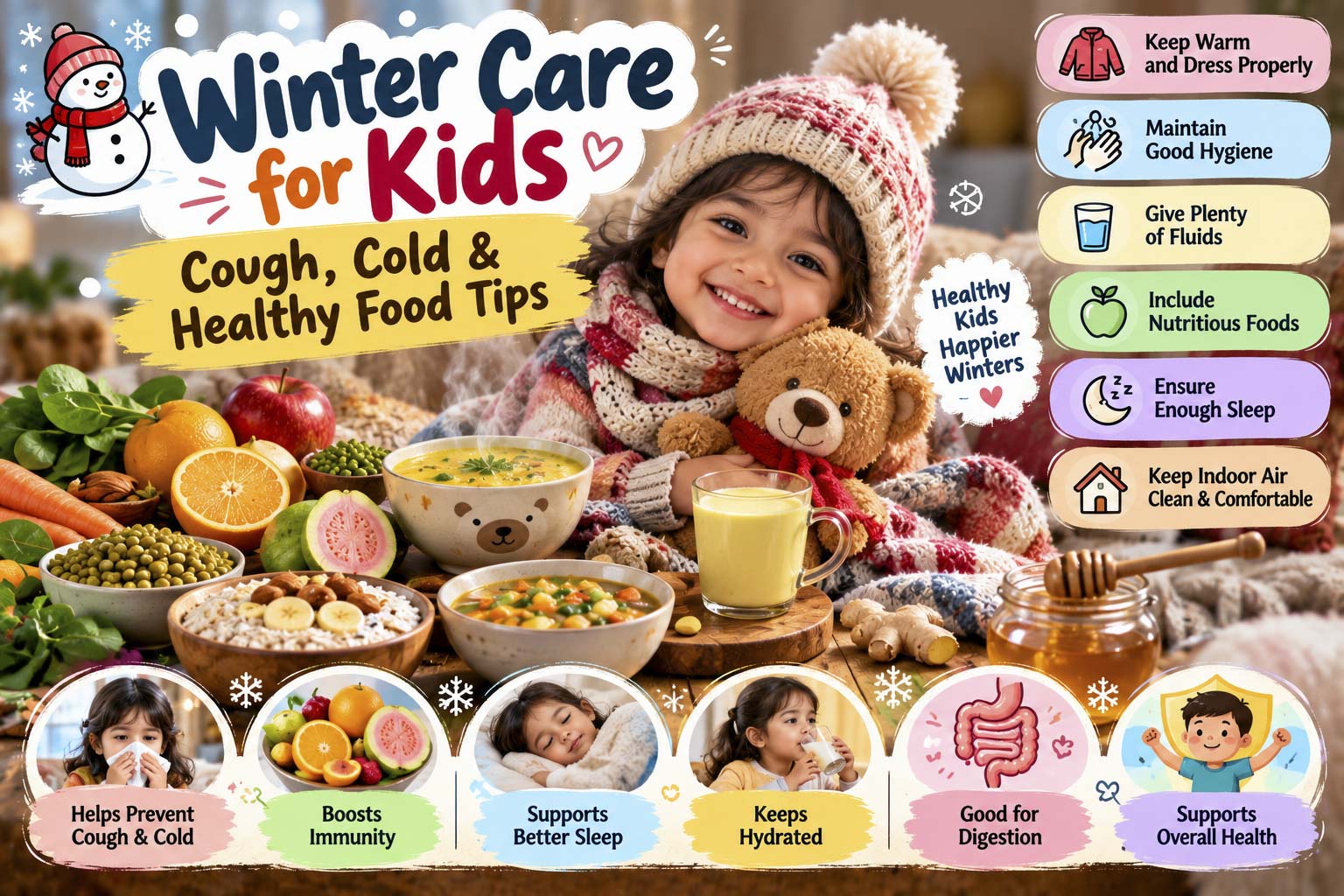
Winter Care for Kids: 12 Tips to Help Prevent Coughs, Colds and Sore Throats
Winter can be a challenging season for parents, especially when children develop a runny nose, cough, sore throat or fever. As families spend more time in enclosed spaces, respiratory viruses can spread more easily. Good hygiene, nutritious meals, adequate sleep and timely medical care can help protect children's health.
While no food or home remedy can guarantee that a child will avoid winter illnesses, simple everyday habits can support their overall well-being and help parents manage mild symptoms safely.
In this guide, discover 12 practical winter-care tips for children, healthy foods to include in their diet, safe ways to soothe a cough and warning signs that should never be ignored.
1. Dress Children Comfortably for Cold Weather
Choose comfortable clothing that keeps your child warm without causing overheating. Layers are often more practical than one thick garment because they can be added or removed as temperatures change.
Winter clothing tips:
- Dress young children in comfortable layers.
- Keep the head, hands and feet warm when needed.
- Change damp clothes promptly.
- Avoid excessive blankets or clothing, especially when a child has a fever.
- Keep infants' sleep spaces free from loose blankets and other soft items.
Remember that cold weather itself does not directly cause a viral infection. Respiratory viruses cause colds, and reducing exposure to them is important.
2. Encourage Regular Handwashing
Children frequently touch toys, tables, door handles and other shared surfaces. Washing hands regularly can help reduce the spread of germs.
Teach children to wash their hands with soap and water:
- Before eating or handling food.
- After using the toilet.
- After coughing, sneezing or blowing their nose.
- After playing outdoors.
- After returning home from school or daycare.
Encourage children to cough or sneeze into a tissue or their elbow and to avoid sharing cups or utensils when they are unwell.
3. Offer Plenty of Fluids
Children may drink less water during colder months because they feel less thirsty. However, staying hydrated remains important.
Offer age-appropriate fluids throughout the day, such as:
- Water.
- Warm water for older children who prefer it.
- Milk, if suitable for the child.
- Clear soups.
- Breast milk or formula for infants, as appropriate for their age.
Warm fluids may feel soothing when a child has a sore throat. They do not cure a cold, but adequate fluids help prevent dehydration.
Important: Do not give hot drinks to young children because of the risk of burns.
4. Include Vitamin C-Rich Fruits
Vitamin C supports normal immune function, but eating extra vitamin C does not guarantee that children will avoid colds.
Include a variety of fruits in their daily meals, such as:
- Guava: A rich source of vitamin C.
- Orange: Provides vitamin C and fluids.
- Amla: A traditional Indian fruit rich in vitamin C.
- Papaya: Provides vitamins, fiber and other nutrients.
- Kiwi: Offers vitamin C and fiber.
Serve fruit in age-appropriate forms to reduce choking risks. For younger children, remove seeds and tough pieces where necessary and supervise them while eating.
5. Serve Protein-Rich Foods
Protein helps children's bodies grow and repair tissues. Including a variety of protein sources supports overall nutrition.
Good options include:
- Dal and lentils.
- Well-cooked beans and chickpeas.
- Eggs, if eaten.
- Milk, yogurt and paneer.
- Fish or lean meat, if part of the family's diet.
- Tofu and other suitable soy foods.
Prepare balanced meals rather than relying on a single food to boost immunity. Children's nutritional needs vary with age, growth and activity level.
6. Add Vegetables to Everyday Meals
Vegetables provide vitamins, minerals and fiber that contribute to a balanced diet.
Winter-friendly choices in many parts of India include:
- Carrots.
- Spinach and other leafy greens.
- Green peas.
- Pumpkin.
- Sweet potatoes.
- Cauliflower.
Try adding vegetables to dal, khichdi, soups, paratha fillings or soft cooked meals. Offer different colors and textures to help children develop healthy eating habits.
7. Prepare Warm, Nutritious Meals
Warm meals can be comforting on cold days and may be easier for some children to eat when they feel unwell.
Try these family-friendly options:
Vegetable khichdi: Combine rice, dal and soft-cooked vegetables for a simple, nourishing meal.
Vegetable soup: Prepare a mild soup with carrots, peas, pumpkin or other vegetables.
Oats porridge: Cook oats with milk or water and add soft fruit if desired.
Dal and roti: Serve well-cooked dal with soft roti and vegetables.
Egg or paneer dishes: Provide protein in a form your child enjoys and can safely chew.
These foods provide nutrients and energy, but none should be presented as a cure for coughs, colds or infections.
8. Help Children Get Enough Sleep
Adequate sleep is important for growth, learning and normal immune function. Establish a predictable bedtime routine and create a quiet, comfortable sleeping environment.
Parents can help by:
- Keeping bedtime and wake-up times reasonably consistent.
- Reducing stimulating screen use before bed.
- Ensuring the bedroom is comfortable and well ventilated.
- Allowing extra rest when a child is unwell.
Sleep requirements vary by age, so infants, preschoolers and school-age children need different amounts of sleep.
9. Keep Indoor Air Comfortable
Dry indoor air can irritate the nose and throat for some children. If you use a humidifier, clean it according to the manufacturer's instructions to prevent the growth of mold and bacteria.
Other useful steps include:
- Keeping indoor spaces free from tobacco smoke.
- Avoiding incense, strong fragrances and other irritating fumes around children.
- Ventilating rooms when practical.
- Avoiding direct exposure to smoke from cooking or heating fuels.
- Keeping the child's sleeping area clean and comfortable.
Never use a bowl of boiling water for steam inhalation around children. Hot water and steam can cause serious burns.
10. What Can Help When a Child Has a Cough?
Most uncomplicated colds improve with time, but children should be monitored carefully.
For mild symptoms, parents may consider the following measures:
- Fluids: Offer regular drinks appropriate for the child's age.
- Saline nose drops: These may help loosen nasal mucus; ask a healthcare professional about suitable products for infants.
- Gentle nasal clearing: For babies, a suitable nasal suction device may help clear mucus.
- Honey for children over one year: A small amount of honey may soothe a cough in children aged 12 months and older.
- Rest: Allow the child to rest and return to normal activities gradually as they feel better.
Never give honey to a baby younger than 12 months because of the risk of infant botulism.
Do not give over-the-counter cough and cold medicines to young children without professional advice. The CDC does not recommend these medicines for children under six because of potential serious side effects. Ask your child's doctor or pharmacist what is appropriate for their age.
11. Avoid Common Winter-Care Mistakes
Some familiar home remedies and habits can be unsafe for children.
Avoid these mistakes:
- Giving antibiotics for a cold without a doctor's prescription. Antibiotics do not treat viral infections.
- Giving adult cough medicines to children.
- Giving honey to babies younger than one year.
- Using boiling-water steam inhalation.
- Giving supplements or high-dose vitamins without checking whether they are appropriate.
- Forcing children to eat when they have little appetite; instead, offer suitable foods and fluids.
- Assuming a high fever or breathing difficulty is simply a seasonal cold.
If you are unsure about a medicine, its dose or whether a home remedy is safe, consult a qualified healthcare professional.
12. Know When to Contact a Doctor
Many mild colds can be managed with supportive care, but some symptoms need prompt medical attention.
Seek emergency medical care if your child:
- Has difficulty breathing or is breathing very fast.
- Has bluish or grey lips or face.
- Is unusually drowsy, difficult to wake or unresponsive.
- Shows signs of severe dehydration.
- Has a seizure or appears seriously unwell.
Contact a healthcare professional promptly if:
- A baby younger than three months has a temperature of 38°C (100.4°F) or higher.
- The fever persists or your child becomes increasingly unwell.
- Symptoms improve and then return or worsen.
- The child is drinking or urinating much less than usual.
- A cough persists for more than three weeks.
- You are concerned about your child's breathing, feeding or general condition.
Do not delay care for a baby or a child who appears seriously ill while trying home remedies.
A Simple Winter Food Routine for Children
Here is an example of a balanced day of meals. Adapt it to your child's age, appetite, allergies and nutritional needs.
| Meal | Example |
|---|---|
| Breakfast | Oats porridge with soft fruit |
| Mid-morning | Age-appropriate fruit |
| Lunch | Dal, rice or roti, and cooked vegetables |
| Evening snack | Yogurt or another suitable snack |
| Dinner | Vegetable khichdi with a protein source |
| Throughout the day | Water and other age-appropriate fluids |
Infants under six months generally need breast milk or infant formula rather than water or solid foods. Introduce complementary foods at around six months when developmentally ready, following pediatric guidance.
Frequently Asked Questions
How can I help prevent coughs and colds in children during winter?
Encourage handwashing, age-appropriate vaccinations, adequate sleep, balanced meals and good indoor air quality. Avoid exposing children to tobacco smoke and limit close contact with people who are ill when practical. These steps reduce risks but cannot prevent every infection.
Which foods are good for children during winter?
Offer a varied diet that includes fruits, vegetables, whole grains, dal, beans, dairy or suitable alternatives, and other protein-rich foods. Guava, oranges, carrots, leafy vegetables and lentils are useful choices, but no particular food prevents all winter illnesses.
Can I give honey to a child with a cough?
Honey may help soothe a cough in children aged one year and older. Never give honey to babies under 12 months.
Should I give my child antibiotics for a cold?
Most common colds are caused by viruses, and antibiotics do not treat viral infections. A doctor can determine whether another condition requires specific treatment.
When should I worry about a child's winter cough?
Breathing difficulty, bluish lips, severe drowsiness or signs of dehydration require urgent attention. Seek prompt medical advice for a very young infant with fever, worsening symptoms or any condition that concerns you.
Final Thoughts
Winter care for children is about more than warm clothing. Good hygiene, balanced meals, sufficient sleep, adequate fluids and a comfortable home environment all contribute to children's overall health.
If your child develops a cough or cold, focus on safe symptom relief and watch for warning signs. Avoid unproven remedies and medicines that are not suitable for their age, and consult a healthcare professional whenever symptoms are severe or you are unsure what to do.
Medical disclaimer: This article is for general educational purposes and does not replace advice from a pediatrician or other qualified healthcare professional.