
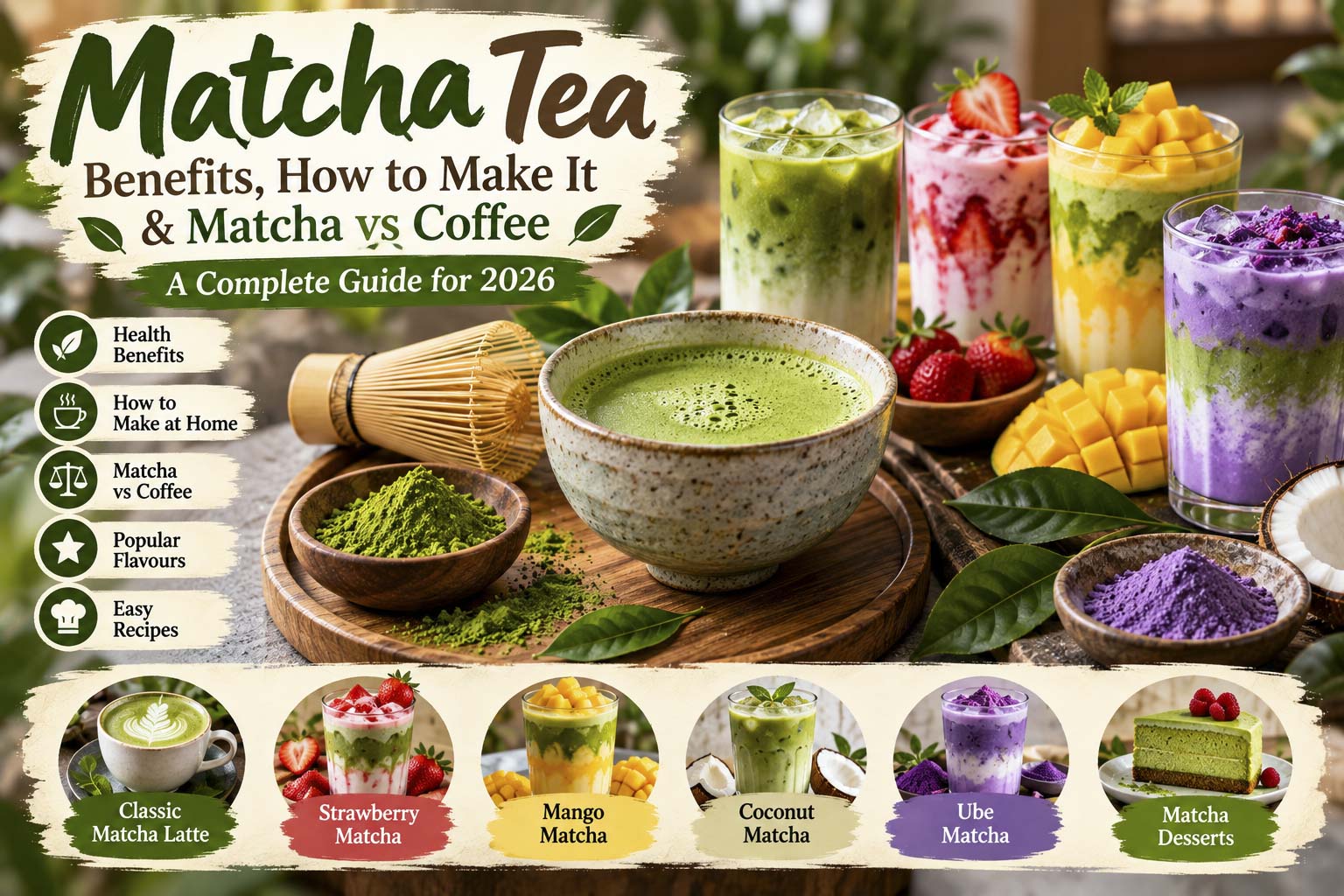
Matcha Tea: Benefits, How to Make It & Matcha vs Coffee
Matcha has quickly moved from specialty café menus into kitchens and daily drink routines. In India, Google Search data shows just how quickly curiosity around this vibrant green tea has grown: searches for “how to make matcha” increased by 1,300% over the past year. Searches for matcha health, matcha protein and matcha-making tools have also risen.
At the same time, new drinks such as Ube and Hōjicha are gaining attention, creating a new wave of colourful and globally inspired beverages.
But what exactly is matcha? How is it different from regular green tea? Is matcha healthier than coffee? And how can you make a good matcha latte at home?
Let's explore everything you need to know.
What Is Matcha?
Matcha is a powdered form of green tea made from the leaves of the Camellia sinensis plant.
Unlike regular green tea, where leaves are steeped in water and then removed, matcha powder is whisked directly into water or milk. This means you consume the powdered tea leaf itself.
Matcha is particularly associated with Japanese tea culture and is known for its bright green colour, distinctive flavour and fine powder-like texture.
According to Harvard Health, matcha contains antioxidants and phytochemicals such as catechins and L-theanine.
Why Is Matcha Trending in India?
Matcha was once primarily found in specialty cafés, but it has increasingly become a home beverage.
Google India reports that searches for “how to make matcha” surged 1,300% over the past year. Searches for “matcha whisk” and “matcha bowl” also became breakout searches in August 2026.
People are also experimenting with different flavours.
Popular searches include:
- Mango matcha
- Strawberry matcha
- Coconut matcha
- Dirty matcha
- Matcha latte
- Iced matcha
- Matcha protein drinks
This suggests that matcha is becoming more than just a traditional tea—it is becoming an ingredient for modern drinks and desserts.
Matcha vs Green Tea
Although both come from the same tea plant, they are prepared and consumed differently.
| Matcha | Regular Green Tea |
|---|---|
| Powdered tea leaves | Whole tea leaves |
| Powder is consumed | Leaves are usually removed |
| Bright green colour | Usually pale green/yellow |
| Stronger, concentrated flavour | Lighter flavour |
| Usually whisked | Usually steeped |
| Can be mixed with milk | Usually served with water |
Matcha is essentially a concentrated way of consuming green tea leaves.
Matcha vs Coffee: Which Has More Caffeine?
Matcha does contain caffeine.
Harvard Health estimates that an 8-ounce serving of matcha can contain roughly 38–89 mg of caffeine, while an 8-ounce cup of coffee may contain around 100–120 mg, although actual amounts vary by preparation and serving size.
So, in general, coffee tends to contain more caffeine per typical cup, but matcha can still provide a meaningful caffeine intake.
If you are sensitive to caffeine, avoid drinking large amounts of either beverage, particularly later in the day.
Potential Benefits of Matcha
Matcha contains several naturally occurring compounds that have been studied for their potential health effects.
1. Contains Antioxidants
Matcha contains catechins and other polyphenols.
These compounds have antioxidant properties and are being studied for their possible role in supporting overall health.
2. May Support Alertness
Because matcha contains caffeine, it can contribute to increased alertness.
It also contains L-theanine, an amino acid found naturally in tea. Research into the combination of caffeine and L-theanine has explored effects on attention and cognitive performance.
3. Contains Plant Compounds
Matcha contains various phytochemicals naturally present in green tea leaves.
However, more research is needed before making strong claims about specific health outcomes.
4. Easy to Add to Foods
Matcha isn't limited to tea.
You can use it in:
- Smoothies
- Yogurt
- Oatmeal
- Desserts
- Pancakes
- Cookies
- Cakes
- Ice cream
- Chia pudding
How to Make Matcha at Home
Making matcha doesn't require complicated equipment.
Ingredients
- 1 teaspoon matcha powder
- 60–80 ml warm water
- 150–200 ml milk for a latte
- Sweetener, optional
- Ice, optional
Method
Step 1: Sift the matcha powder into a bowl or cup.
Step 2: Add a small amount of warm water.
Step 3: Whisk vigorously until the matcha becomes smooth and slightly frothy.
Step 4: Add more water for traditional-style matcha.
For a latte, add warm or cold milk.
Step 5: Add honey, sugar or another sweetener if desired.
For an iced version, pour the matcha over ice and add cold milk.
How to Make an Iced Matcha Latte
An iced matcha latte is one of the easiest modern matcha drinks to prepare.
Ingredients
- 1 teaspoon matcha
- 60 ml warm water
- 150 ml cold milk
- Ice
- Sweetener, optional
Instructions
- Sift matcha into a cup.
- Add warm water.
- Whisk until smooth.
- Fill a glass with ice.
- Add cold milk.
- Pour the prepared matcha over the milk.
- Stir and serve.
You can experiment with oat milk, almond milk, coconut milk or regular dairy milk.
7 Popular Matcha Flavours to Try
1. Strawberry Matcha
Strawberry puree or strawberry syrup is combined with milk and matcha.
Google reported that searches for strawberry matcha rose 400% during the summer trend period in India.
2. Mango Matcha
Mango and matcha provide a sweet and slightly bitter combination.
Searches for mango matcha also showed strong growth during summer.
3. Coconut Matcha
Coconut milk or coconut water can be combined with matcha for a tropical variation.
4. Dirty Matcha
Dirty matcha typically combines matcha with a shot of espresso.
It creates a drink somewhere between a matcha latte and coffee.
5. Vanilla Matcha
Vanilla adds sweetness and aroma to matcha without overpowering its flavour.
6. Chocolate Matcha
Cocoa and matcha can be combined for a richer dessert-style drink.
7. Ube Matcha
Ube is a naturally purple-fleshed yam commonly used in Filipino cuisine.
Google India reports that searches for ube reached an all-time high in August 2026, while “ube matcha” became a breakout search.
What Does Matcha Taste Like?
Matcha has a distinctive flavour that can be difficult to compare with coffee or regular tea.
Depending on its quality and preparation, it may taste:
- Earthy
- Grassy
- Slightly bitter
- Vegetal
- Creamy
- Umami-like
- Mildly sweet
High-quality matcha can have a smoother and more balanced taste.
If you are trying matcha for the first time, a latte can be easier to enjoy than strong plain matcha because milk softens the flavour.
Matcha, Ube and Hōjicha: What's the Difference?
These three ingredients are currently attracting attention in India's beverage culture, but they are very different.
Matcha
Powdered green tea with a vibrant green colour and earthy, vegetal flavour.
Ube
A purple yam from the Philippines, commonly used in desserts and sweet drinks.
Hōjicha
A Japanese green tea that is roasted, producing a darker colour and a toasted, nutty flavour.
Google India says searches for both Ube and Hōjicha reached major milestones in 2026, with Hōjicha also seeing breakout searches for “what is hojicha” and “hojicha latte.”
Is Matcha Better Than Coffee?
There is no universal answer.
The better choice depends on your taste, caffeine tolerance and overall diet.
Choose Matcha If You Like:
- Tea-based drinks
- Earthy flavours
- Lower caffeine than a typical coffee
- Antioxidant-rich beverages
- Cold or hot lattes
Choose Coffee If You Prefer:
- Strong roasted flavours
- Higher caffeine per typical cup
- Espresso-based drinks
- A familiar morning beverage
Both can be part of a balanced diet when consumed appropriately.
Things to Keep in Mind Before Drinking Matcha
Matcha is not a magic health drink.
It contains caffeine, so drinking too much may contribute to:
- Difficulty sleeping
- Restlessness
- Increased heart rate
- Anxiety or jitters in sensitive people
- Headaches in some individuals
Also remember that a matcha latte can become a high-calorie or high-sugar drink depending on the amount of syrup, sugar and toppings added.
For a simpler option, use unsweetened matcha with milk and add only a small amount of sweetener if needed.
How Much Matcha Should You Use?
There is no single serving size that works for everyone.
A common homemade serving is around 1 teaspoon of matcha powder, but the amount can vary depending on the product, desired strength and caffeine tolerance.
If you are new to matcha, starting with a smaller amount can help you understand how you respond to its caffeine.
Matcha Recipe Ideas
Once you have matcha powder at home, try using it in different recipes.
Breakfast
- Matcha overnight oats
- Matcha smoothie
- Matcha chia pudding
- Matcha yogurt bowl
Drinks
- Iced matcha latte
- Strawberry matcha
- Mango matcha
- Coconut matcha
- Vanilla matcha
Desserts
- Matcha cookies
- Matcha cake
- Matcha brownies
- Matcha ice cream
- Matcha cheesecake
Frequently Asked Questions
Is matcha healthier than coffee?
Matcha and coffee have different nutritional profiles and caffeine levels. Matcha contains catechins and other tea compounds, while coffee contains its own range of bioactive compounds. Neither should automatically be considered healthier for everyone.
Does matcha contain caffeine?
Yes. Matcha contains caffeine, and the amount varies by serving and preparation. Harvard Health estimates roughly 38–89 mg per 8-ounce serving.
Can I drink matcha every day?
Many people consume matcha regularly, but the appropriate amount depends on total caffeine intake and individual tolerance.
Is matcha the same as green tea?
Matcha is a type of green tea, but it is made from powdered tea leaves that are consumed rather than simply steeped and removed.
Why is matcha so popular in India?
Google Search data shows rapidly increasing interest in making matcha at home, experimenting with flavours and buying matcha preparation tools.
What is ube matcha?
Ube matcha is a modern beverage combining matcha with ube, a naturally purple yam commonly used in Filipino desserts and drinks.
Final Thoughts
Matcha is no longer just a niche café drink in India. Search interest shows that people are learning how to make it at home, experimenting with flavours and comparing it with other popular beverages.
From a simple cup of traditional matcha to strawberry matcha, mango matcha, coconut matcha and ube matcha, there are plenty of ways to explore the trend.
And with Ube and Hōjicha also gaining attention, India's beverage culture may be entering an even more adventurous phase.
Would you choose matcha, coffee, ube or Hōjicha for your next drink?
Disclaimer: Matcha contains caffeine. Health effects vary between individuals, and matcha should not be considered a treatment for any medical condition. If you have a condition affected by caffeine or take medication that requires dietary restrictions, consult a healthcare professional.