
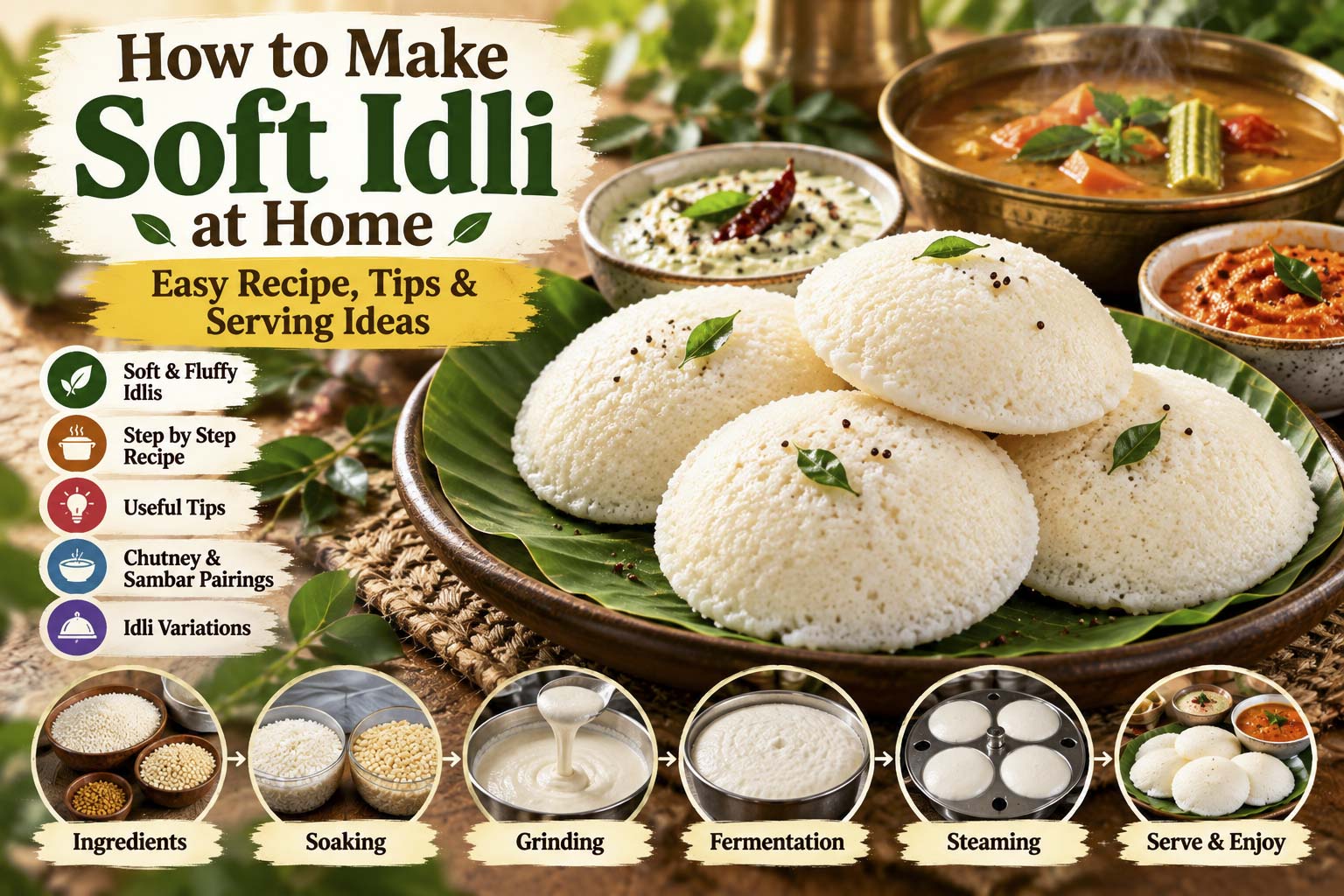
How to Make Soft Idli at Home: Easy Recipe for Fluffy, Healthy Idlis
Idli is one of India's most popular breakfast dishes, especially in South India. These soft, fluffy, steamed rice cakes are loved for their mild taste, light texture and versatility. Served with coconut chutney and hot sambar, idli makes a delicious breakfast or snack for the whole family.
If you have ever wondered how restaurants make perfectly soft idlis, this guide will help you prepare them at home. Learn about the ingredients, batter preparation, fermentation, steaming techniques and common mistakes to avoid.
Whether you are a beginner or an experienced home cook, this easy idli recipe will help you make delicious idlis in your own kitchen.
Ingredients for Soft Idli
For approximately 16–20 idlis, you will need:
- 2 cups idli rice or parboiled rice
- ½ cup urad dal (split, skinned black gram)
- 1 teaspoon fenugreek seeds (optional)
- Water as needed
- Salt to taste
- A little oil for greasing the idli moulds
Note: The number of idlis depends on the size of your moulds.
How to Make Idli Batter
Step 1: Wash the Ingredients
Wash the rice and urad dal separately until the water runs mostly clear.
Soak the rice and urad dal in separate bowls. Add fenugreek seeds to the urad dal if using.
Step 2: Soak the Rice and Dal
Soak the rice and dal for around 4–6 hours. The soaking time can vary depending on the ingredients and room temperature.
Proper soaking helps the ingredients grind into a smooth batter.
Step 3: Grind the Ingredients
Drain the soaked ingredients.
Grind the urad dal with water until it becomes smooth and fluffy. Grind the rice separately to a slightly grainy consistency.
Combine both mixtures in a large bowl.
Step 4: Ferment the Batter
Mix the batter thoroughly and cover the bowl loosely.
Leave it in a warm place for approximately 8–12 hours, or until it becomes airy and increases in volume. Fermentation may take longer in cold weather.
Step 5: Add Salt
Once the batter has fermented, gently mix in salt if you did not add it earlier.
Avoid stirring too vigorously because you want to preserve some of the air in the batter.
How to Steam Idli
- Lightly grease the idli moulds.
- Pour the batter into each mould, leaving a little room for expansion.
- Add water to the steamer or idli cooker.
- Place the idli stand inside and cover with the lid.
- Steam for approximately 10–15 minutes, depending on the size of the idlis and the equipment.
- Check that the centre is cooked using a toothpick or skewer.
- Allow the idlis to rest briefly before removing them with a spoon.
Serve warm with coconut chutney and sambar.
7 Tips for Making Soft and Fluffy Idli
1. Use Suitable Rice
Idli rice or parboiled rice is commonly used for a soft texture.
2. Grind the Urad Dal Well
A fluffy urad dal batter helps create a lighter texture.
3. Allow Enough Fermentation Time
Insufficient fermentation can result in dense idlis. Look for an airy batter that has visibly increased in volume.
4. Keep the Batter at a Suitable Temperature
In cooler weather, fermentation may take longer. Place the covered batter in a consistently warm location.
5. Avoid Adding Too Much Water
The batter should be thick enough to hold its shape while remaining easy to pour.
6. Don't Overmix After Fermentation
Gently mix the batter before steaming so that you do not lose too much of its airiness.
7. Don't Oversteam
Oversteaming can make idlis dry or firm. Check for doneness rather than relying only on the clock.
What to Serve with Idli
Idli pairs well with many traditional South Indian accompaniments.
- Coconut chutney: Creamy, fresh and mildly sweet.
- Sambar: A lentil-based vegetable stew with spices.
- Tomato chutney: Tangy and flavourful.
- Mint chutney: Fresh and aromatic.
- Peanut chutney: Nutty and satisfying.
- Podi and ghee: A popular combination of spiced lentil powder and ghee.
For a classic breakfast, serve hot idlis with sambar and coconut chutney.
Different Types of Idli to Try
Once you master the basic recipe, try these variations:
- Rava Idli: Made using semolina rather than fermented rice-and-dal batter.
- Ragi Idli: Includes finger millet flour.
- Oats Idli: Uses oats as part of the batter.
- Kanchipuram Idli: A traditional variety seasoned with spices.
- Mini Idli: Small idlis often served with sambar.
- Vegetable Idli: Includes finely chopped vegetables.
- Millet Idli: Uses millet in place of some of the rice.
Each variation has a different texture and flavour, so cooking times and ingredient ratios may need adjustment.
Is Idli Healthy?
Idli is steamed rather than deep-fried, making it a useful option for a balanced breakfast.
Traditional idli contains carbohydrates from rice and protein from urad dal. Fermentation also changes the batter's characteristics and can improve the availability of some nutrients.
To make a more balanced meal, serve idli with sambar, which adds lentils and vegetables, and a suitable portion of chutney.
However, the nutritional value of your meal depends on the ingredients, portion size and accompaniments. No single food guarantees weight loss or better health.
Common Idli-Making Problems and Solutions
| Problem | Possible Reason | What to Try |
|---|---|---|
| Hard idli | Batter or cooking issue | Check batter consistency and steaming time |
| Flat idli | Poor fermentation | Allow more time for the batter to rise |
| Dense idli | Batter too heavy or insufficiently fermented | Grind and ferment the batter properly |
| Sour batter | Excessive fermentation | Reduce fermentation time or refrigerate sooner |
| Sticky idli | Not fully cooked or removed too early | Steam until cooked and let it rest briefly |
How to Store Idli Batter
Freshly fermented batter can be refrigerated in a covered container if you are not using it immediately.
Use clean utensils when handling the batter and follow safe food-storage practices. Fermentation and storage time depend on temperature and ingredients, so discard batter that shows signs of spoilage.
If the batter is refrigerated, you may need to let it lose some of its chill before steaming for consistent results.
Frequently Asked Questions
Why are my idlis not soft?
Common reasons include insufficient fermentation, poor grinding, an unsuitable batter consistency or oversteaming.
How long should idli batter ferment?
It often takes around 8–12 hours in a warm environment, but cooler temperatures can extend the time.
Can I make idli without an idli cooker?
Yes. You can use suitable heatproof moulds in a steamer, provided they are safe for steaming and fit properly inside the equipment.
Can I make idli batter ahead of time?
Yes. Prepare and ferment the batter ahead, then refrigerate it in a covered container when it is ready.
What is the best side dish for idli?
Sambar and coconut chutney are classic choices. Tomato chutney, peanut chutney and podi are also popular.
Final Thoughts
Making soft idli at home is easier when you understand the importance of soaking, grinding, fermentation and steaming.
Start with the traditional rice-and-urad-dal recipe, follow the tips above and experiment with different chutneys and variations as you gain confidence.
Whether you enjoy idli for breakfast, as an evening snack or as part of a South Indian meal, this simple dish is a wonderful addition to your home cooking.
Try this easy idli recipe and enjoy soft, fluffy homemade idlis with your favourite chutney and sambar!