
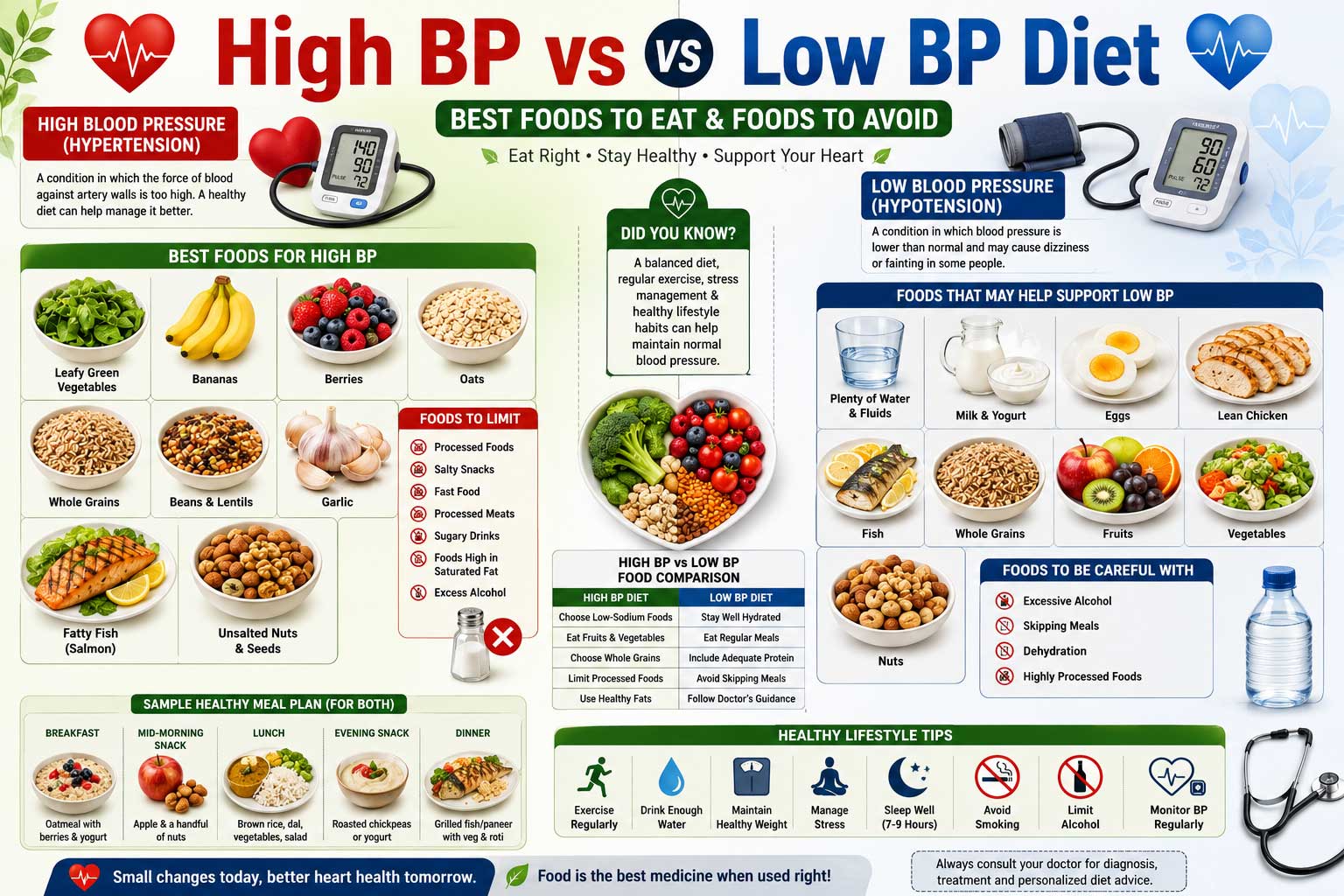
High BP vs Low BP Diet: Best Foods to Eat and Foods to Avoid
Blood pressure is an important indicator of heart health. While high blood pressure (hypertension) and low blood pressure (hypotension) are different conditions, both may require medical evaluation and can benefit from healthy lifestyle habits. One of the most important factors is choosing a balanced diet that supports overall cardiovascular health.
This guide explains the difference between high and low blood pressure, the best foods to include, foods to limit, and simple meal ideas to help maintain a healthy lifestyle.
Medical Disclaimer: This article is for educational purposes only and is not a substitute for professional medical advice. Always consult your doctor before making significant changes to your diet or medications.
What Is High Blood Pressure?
High blood pressure occurs when the force of blood against artery walls remains consistently higher than recommended. Over time, it can increase the risk of heart disease, stroke, and kidney problems if left untreated.
Best Foods for High BP
- Leafy green vegetables
- Bananas
- Berries
- Oats
- Whole grains
- Beans and lentils
- Garlic
- Low-fat yogurt
- Fatty fish (such as salmon)
- Unsalted nuts and seeds
Foods to Limit
- Processed foods
- Salty snacks
- Fast food
- Processed meats
- Sugary drinks
- Foods high in saturated fat
- Excess alcohol
What Is Low Blood Pressure?
Low blood pressure occurs when blood pressure is lower than expected and may cause symptoms such as dizziness or fainting in some people. Causes and treatment vary, so medical advice is important.
Foods That May Help Support a Balanced Diet
- Plenty of water and fluids
- Oral rehydration solutions when recommended by a healthcare professional
- Milk and yogurt
- Eggs
- Lean chicken
- Fish
- Whole grains
- Fruits
- Vegetables
- Nuts
People with low blood pressure should not intentionally increase salt intake unless advised by a healthcare professional.
Foods to Be Careful With
- Excessive alcohol
- Skipping meals
- Dehydration
- Highly processed foods
High BP vs Low BP Food Comparison
| High Blood Pressure | Low Blood Pressure |
|---|---|
| Choose low-sodium foods | Stay well hydrated |
| Eat plenty of fruits and vegetables | Eat regular balanced meals |
| Choose whole grains | Include adequate protein |
| Limit processed foods | Avoid skipping meals |
| Use healthy fats | Follow your doctor's guidance |
Sample Healthy Meal Plan
Breakfast
Oatmeal with berries and plain yogurt.
Mid-Morning Snack
A handful of unsalted nuts and an apple.
Lunch
Brown rice, dal, mixed vegetables, and salad.
Evening Snack
Roasted chickpeas or plain yogurt.
Dinner
Grilled fish or paneer with vegetables and whole wheat roti.
Healthy Lifestyle Tips
- Exercise regularly if approved by your doctor.
- Drink enough water throughout the day.
- Maintain a healthy weight.
- Sleep 7–9 hours each night.
- Manage stress with relaxation techniques.
- Avoid smoking.
- Limit alcohol consumption.
- Monitor your blood pressure regularly.
Frequently Asked Questions
Which fruits are good for blood pressure?
Many fruits, including berries, bananas, oranges, and apples, can be part of a balanced diet. Individual needs may vary.
Can diet alone control blood pressure?
Diet is an important part of overall management, but many people also need lifestyle changes, regular monitoring, and prescribed medication.
Is coffee good for low blood pressure?
The effects of caffeine vary from person to person. Discuss caffeine intake with your healthcare professional if you have concerns about your blood pressure.
Can I eat salt if I have low blood pressure?
Only increase salt intake if your healthcare provider recommends it.
Final Thoughts
A healthy, balanced diet can play an important role in supporting heart health, whether you have high or low blood pressure. Focus on whole foods, adequate hydration, regular meals, and healthy lifestyle habits while following the advice of your healthcare provider.
Small, consistent changes can make a meaningful difference over time. Pair nutritious meals with regular physical activity, quality sleep, and routine medical checkups to help maintain overall well-being.
Explore CookingBook.in for more healthy recipes, nutrition guides, and heart-friendly meal ideas.