
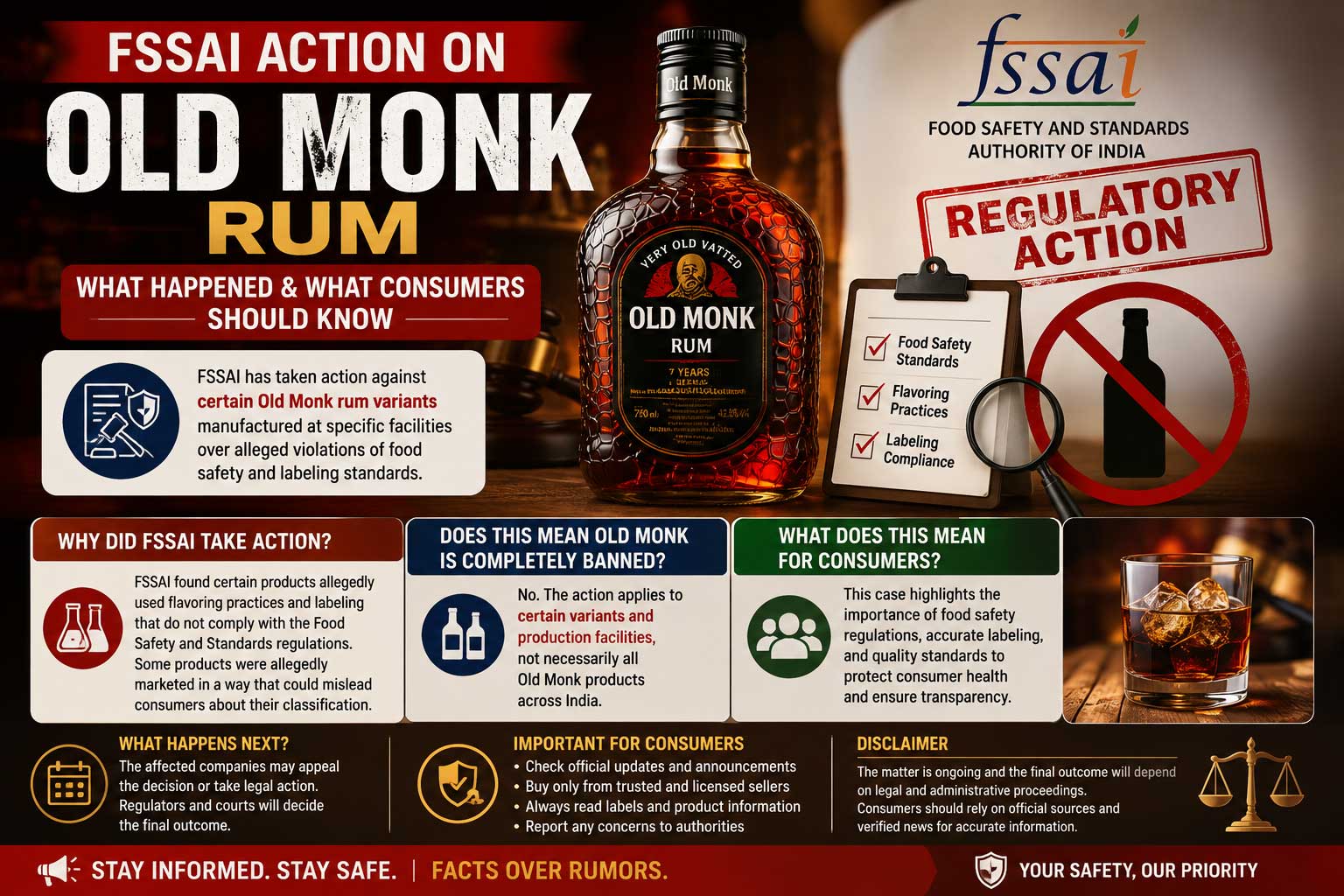
FSSAI Action on Old Monk Rum: What Happened and What Consumers Should Know
Old Monk, one of India's most iconic rum brands, has become a trending topic after the Food Safety and Standards Authority of India (FSSAI) took regulatory action affecting certain variants of the brand.
According to media reports, the action targets specific Old Monk variants manufactured at certain facilities, rather than all Old Monk products nationwide. The regulator has cited alleged violations related to food safety standards, flavoring practices, and product classification. The affected companies have the opportunity to challenge the decision through the legal and administrative process, and some have stated they will do so. As the matter is ongoing, the final outcome has not yet been determined.
Why Did FSSAI Take Action?
Reports indicate that FSSAI found certain products contained flavoring practices or labeling that allegedly did not comply with applicable food safety standards. Regulators said some products were being marketed in ways that could mislead consumers regarding their classification.
The enforcement action is part of a broader review of alcoholic beverage compliance in India.
Does This Mean Old Monk Is Completely Banned?
No. Current reports indicate the action applies to certain variants and production facilities, not necessarily every Old Monk product sold across India. The exact scope depends on the regulatory orders and the outcome of ongoing legal proceedings.
What Does This Mean for Consumers?
For consumers, the case highlights the importance of food safety regulations, accurate labeling, and quality standards. It also shows how regulatory authorities monitor products to ensure compliance with established rules.
What Happens Next?
The affected companies may appeal the decision or take legal action. During this process, regulators and courts will determine whether the enforcement action should remain in place, be modified, or be overturned.
Final Thoughts
The FSSAI action involving certain Old Monk rum variants has attracted nationwide attention because of the brand's long history and popularity. While regulators cite alleged compliance and labeling issues, the companies involved have disputed the findings and are pursuing legal remedies.
As the case continues, consumers should rely on official announcements and verified news sources rather than social media rumors. The final regulatory outcome will depend on the ongoing appeal and legal process.